
from the field to the lab
Arous Al-Shamal Laboratories for Engineering Studies
Where precision starts at the foundation
And the journey of quality continues beyond delivery...
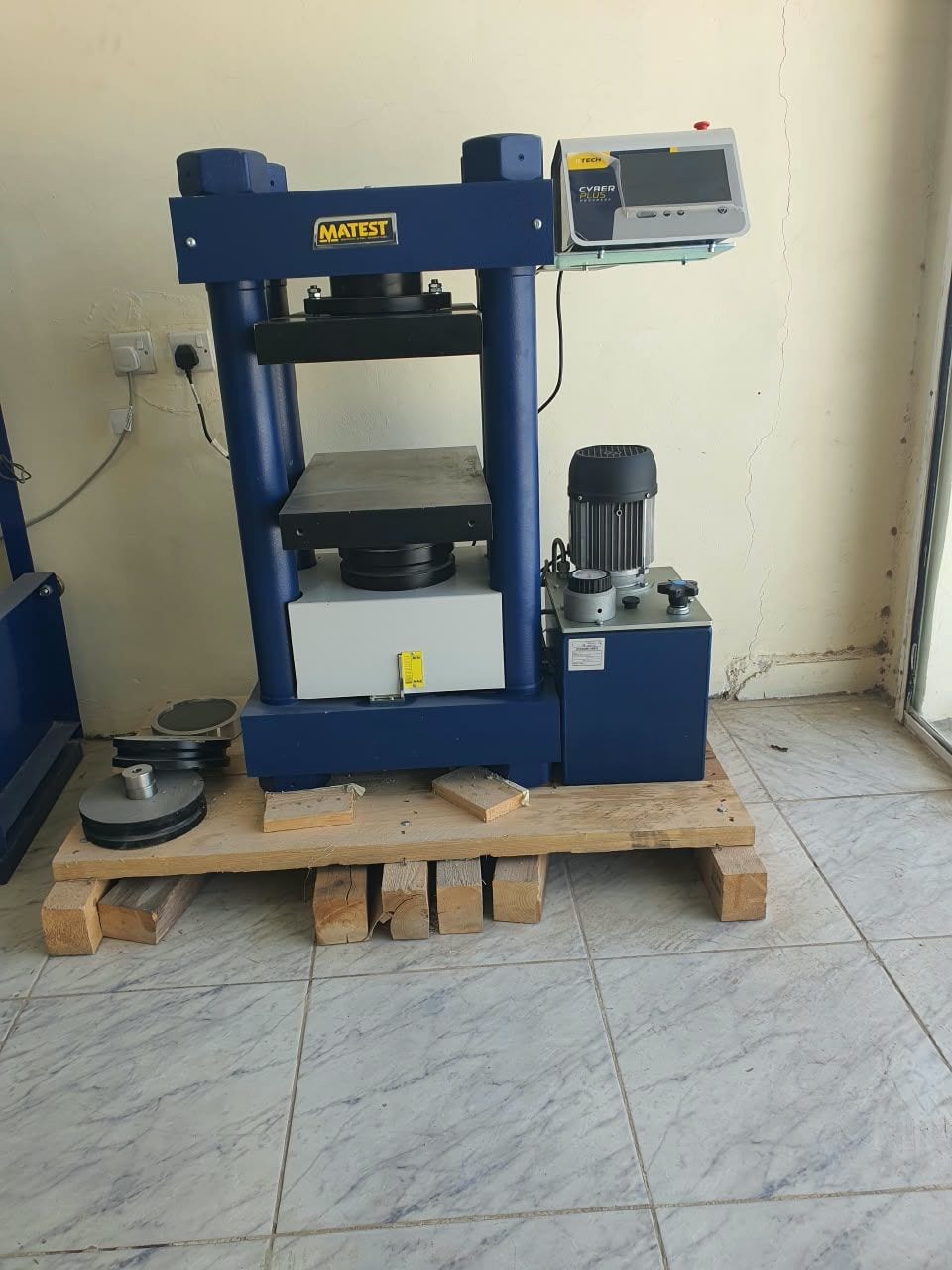
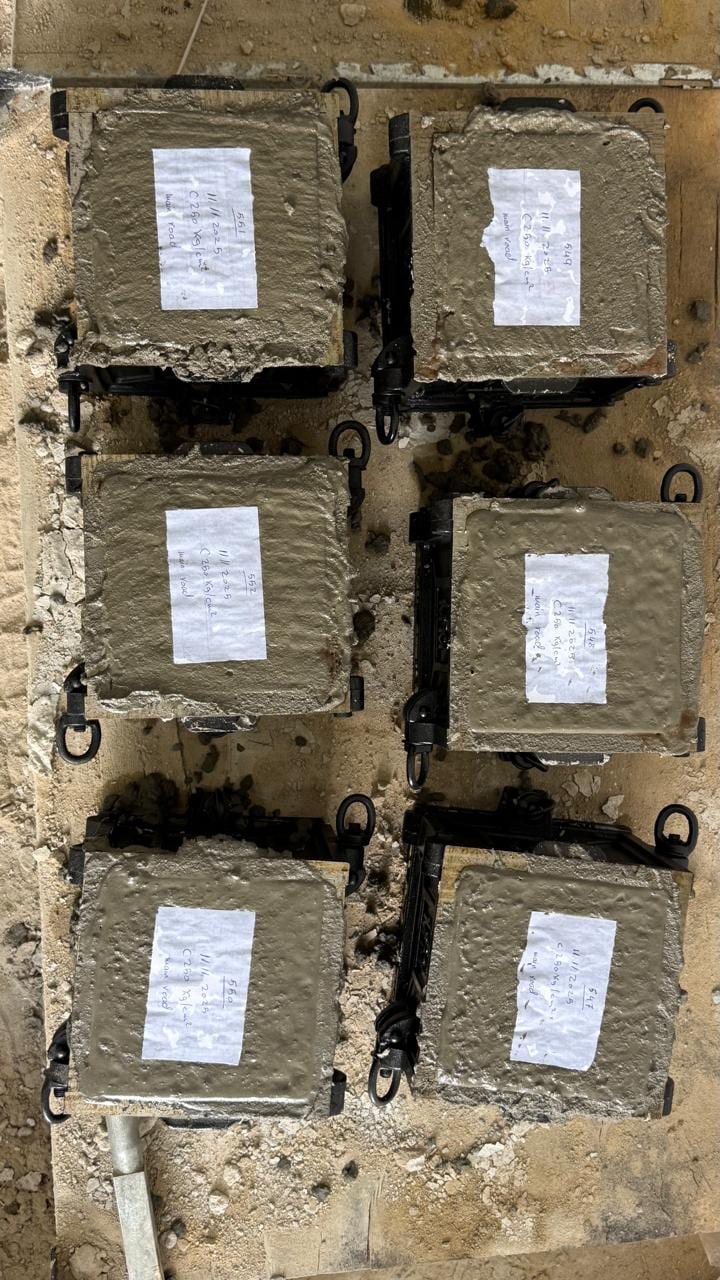
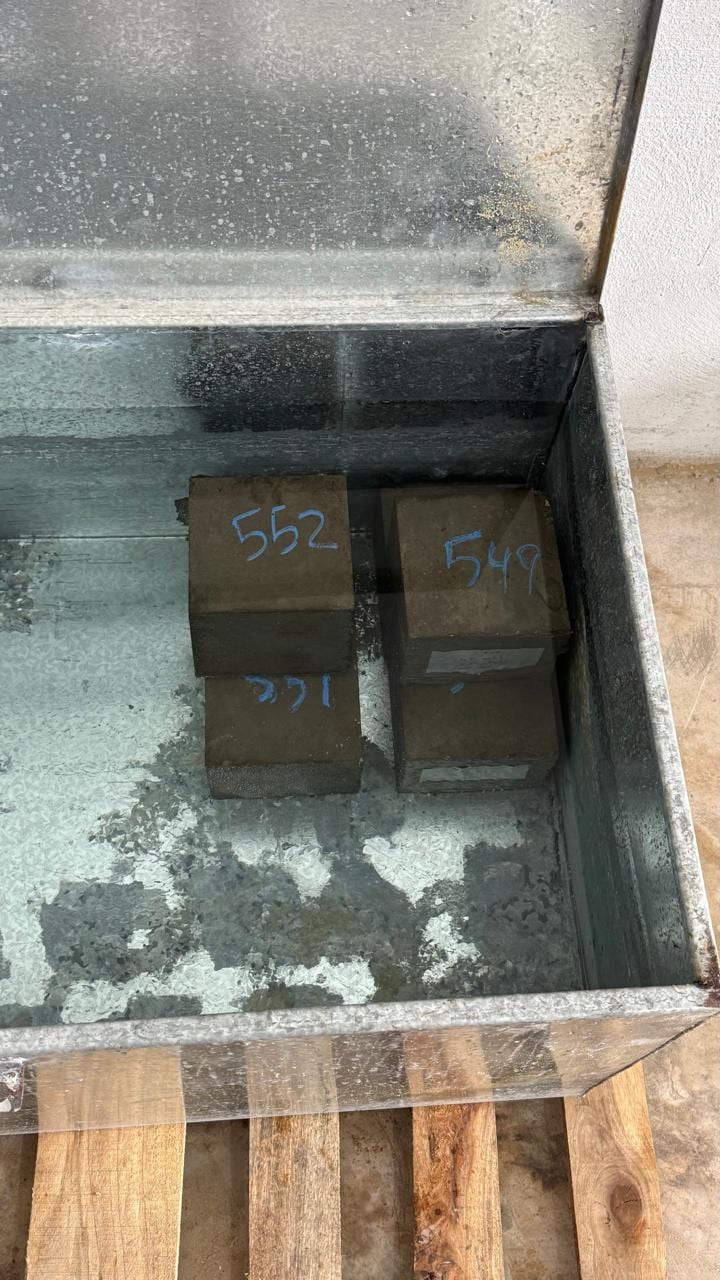
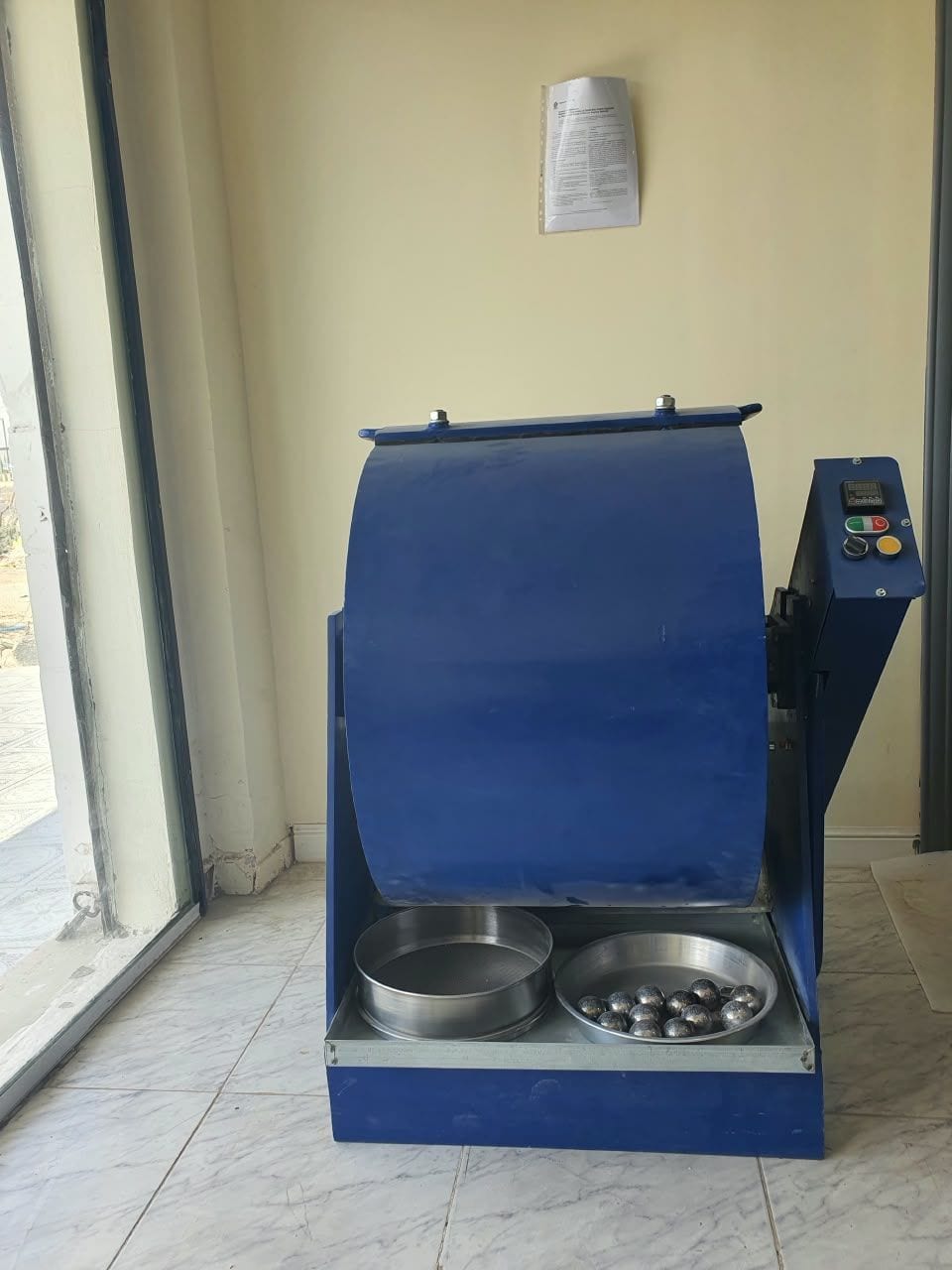
is built on a trusted standard
Construction materials testing, in the lab and on site
We test construction materials for public and private projects: concrete and concrete products, aggregates, asphalt and soils — backed by a field team for sampling and in-situ testing.
Concrete Testing
Fresh concrete tested on site and hardened concrete in the laboratory, to confirm that what is placed meets the grade specified in the design.
- Slump, temperature & air content
- Cubes & cylinders
- Drilled cores
- Rebound hammer & UPV
- Flexural & splitting tensile
- Mix design
Concrete Products
Masonry blocks, hollow slab blocks, kerbs, tiles and interlock paving: strength, density, dimensions and absorption, to Jordanian and international standards.
- Masonry blocks
- Hollow slab blocks
- Precast kerbs
- Terrazzo tiles
- Interlock paving blocks
Aggregates
Aggregates used in concrete, asphalt mixtures and base courses.
- Sieve analysis
- Los Angeles abrasion
- Sulfate soundness
- Sand equivalent
- Flakiness & elongation
- Specific gravity & absorption
Asphalt
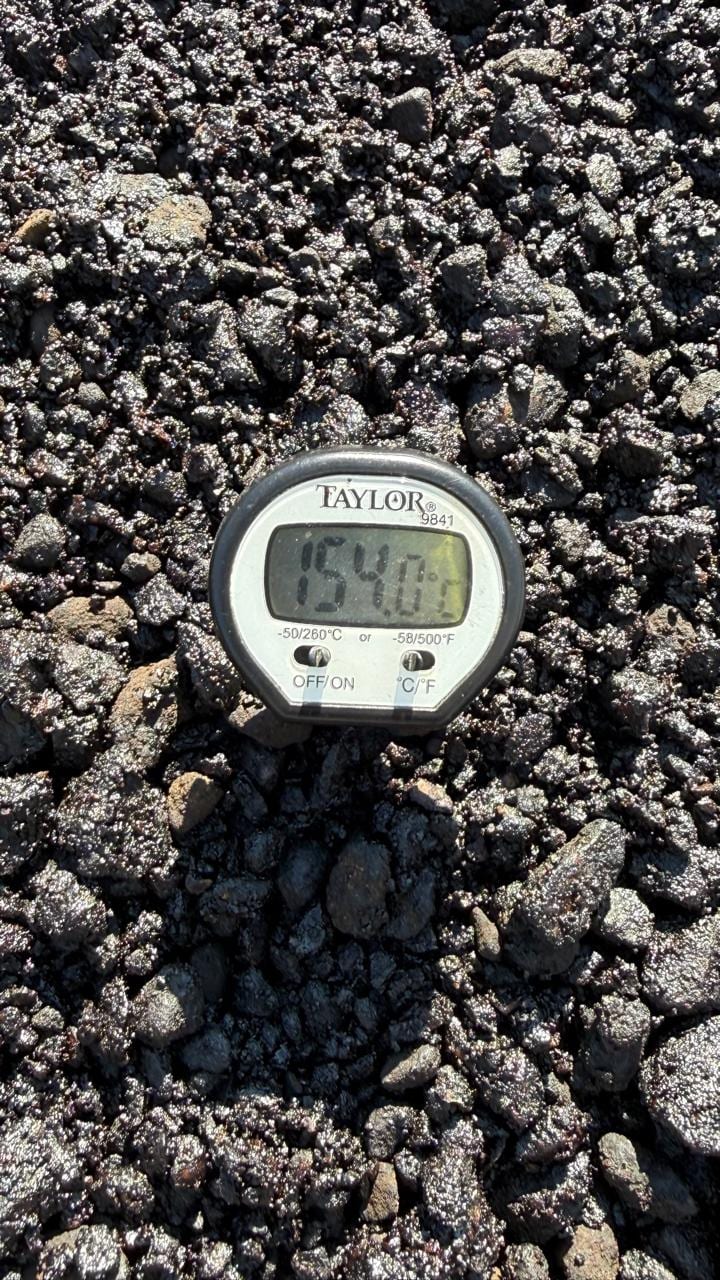
Plant-produced mixtures and finished pavement layers — binder content, gradation, density and compaction against project requirements.
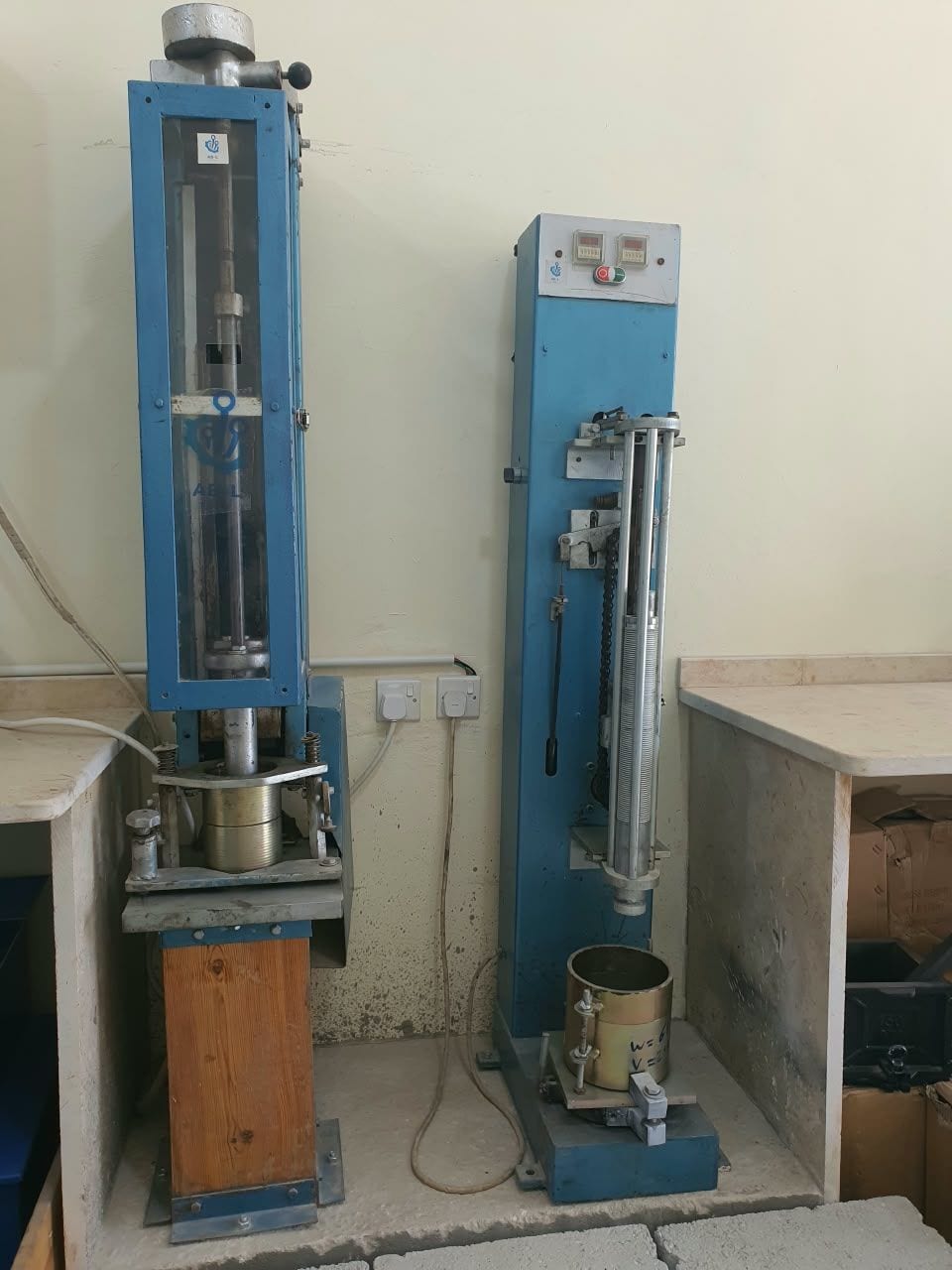
- Marshall mix design
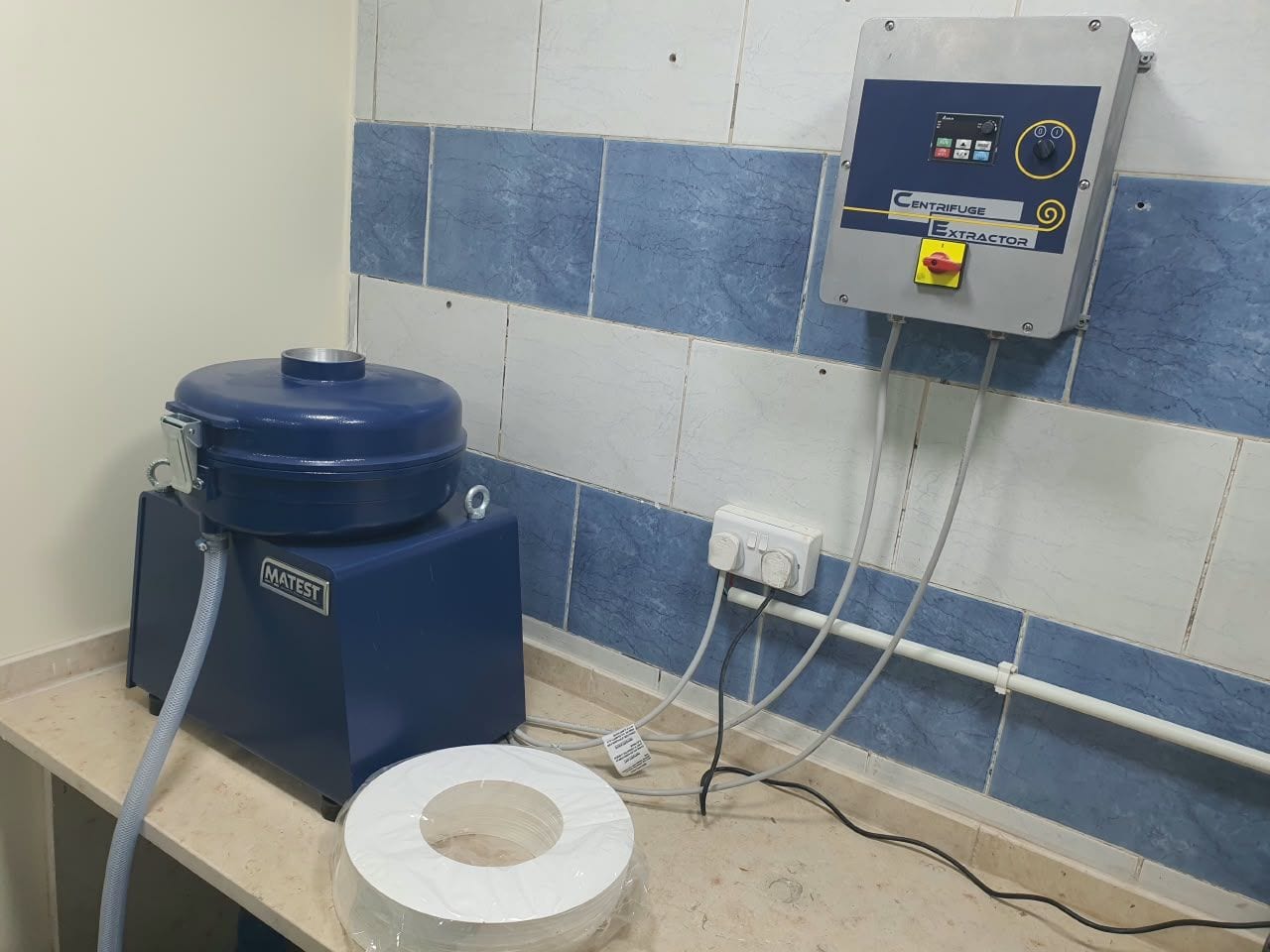
- Extraction & gradation
- GMM & air voids
- Cores, thickness & compaction
Soil
Fill, base and subbase materials and road subgrades — from classification through to verifying compaction on site.
- Classification & Atterberg limits
- Sieve & hydrometer analysis
- Proctor & CBR
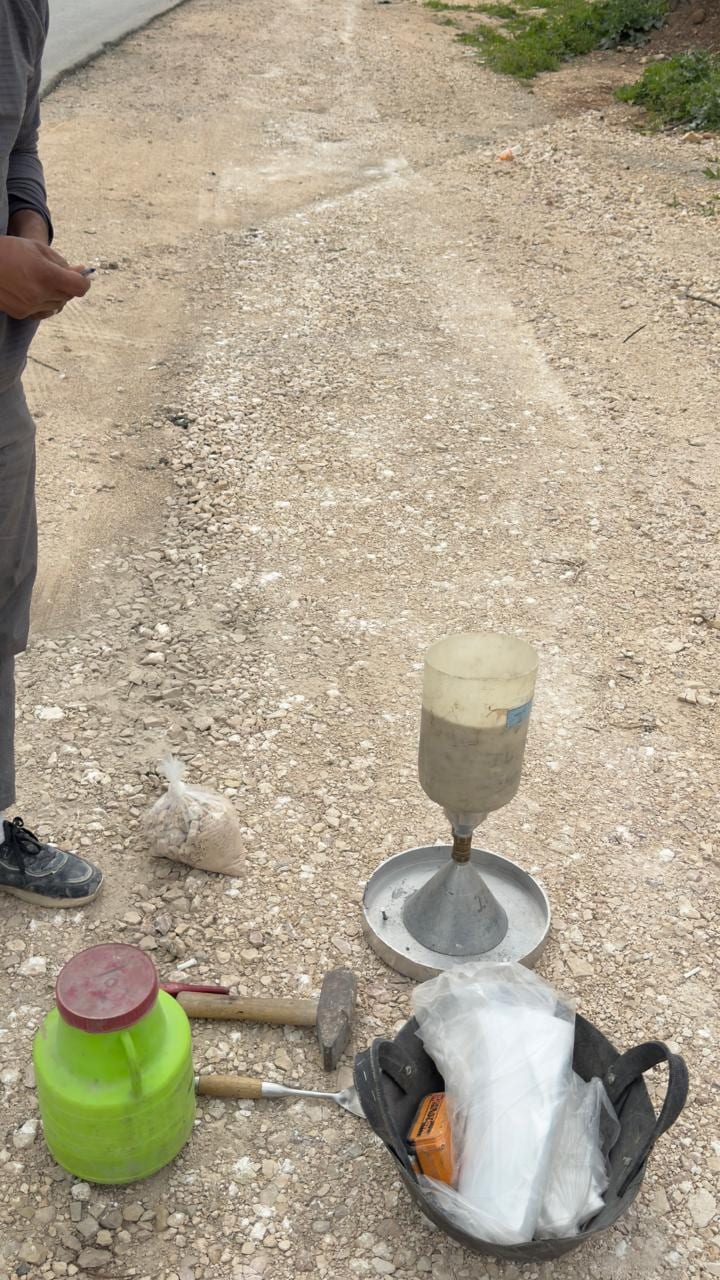
- Sand-cone field density
- Chemical tests
Tests and standards
Every test we run, and the standard it is run to.
Equipment used
Fresh concrete
- Sampling of fresh concreteBS EN 12350-1 · ASTM C172
- Slump testBS EN 12350-2 · ASTM C143
- Temperature of fresh concreteASTM C1064
- Density (unit weight)BS EN 12350-6 · ASTM C138
- Air content — pressure methodBS EN 12350-7 · ASTM C231
- Making and curing test specimensBS EN 12390-2 · ASTM C31
Hardened concrete
- Compressive strength of cubesBS EN 12390-3
- Compressive strength of cylindersASTM C39
- Density of hardened concreteBS EN 12390-7
- Drilled cores — extraction and testingASTM C42 · BS EN 12504-1
- Rebound number — Schmidt hammerASTM C805 · BS EN 12504-2
- Ultrasonic pulse velocityASTM C597 · BS EN 12504-4
- Flexural strengthASTM C78 · BS EN 12390-5
- Splitting tensile strengthASTM C496 · BS EN 12390-6
- Water absorptionBS 1881-122
Mix design
- Concrete mix design and trial mixesACI 211.1
Equipment used
- Concrete masonry blocks — strength, density, dimensionsJS 276 · ASTM C140
- Hollow slab blocks — strength, density, dimensionsJS 944 · ASTM C140
- Precast concrete kerbs — bending strength, absorptionJS 479 · BS EN 1340
- Cement terrazzo tiles — bending, absorption, dimensionsJS 45
- Concrete paving blocks (interlock) — strength, absorptionBS EN 1338 · ASTM C936
Equipment used
- Sieve analysis of fine and coarse aggregatesASTM C136
- Material finer than No. 200 sieve by washingASTM C117
- Specific gravity and absorption — coarse aggregateASTM C127
- Specific gravity and absorption — fine aggregateASTM C128
- Los Angeles abrasionASTM C131
- Soundness — sodium / magnesium sulfateASTM C88
- Sand equivalentASTM D2419
- Flakiness and elongation indicesBS 812-105 · ASTM D4791
- Clay lumps and friable particlesASTM C142
- Bulk density and voidsASTM C29
- Sulfate and chloride contentBS EN 1744-1
Equipment used
Asphalt mixtures
- Marshall mix designAsphalt Institute MS-2
- Marshall stability and flowASTM D6927
- Bulk specific gravity of compacted mixturesASTM D2726
- Theoretical maximum specific gravity (GMM)ASTM D2041
- Percent air voidsASTM D3203
- Binder content by centrifuge extractionASTM D2172
- Gradation of extracted aggregateASTM D5444
Paved layers
- Coring of asphalt pavementASTM D5361
- Thickness of compacted specimensASTM D3549
- Degree of field compactionASTM D2726 · D2041
Equipment used
Physical properties & classification
- Water (moisture) contentASTM D2216
- Atterberg limits — LL, PL, PIASTM D4318
- Particle-size analysis by sievingASTM D6913
- Hydrometer analysisASTM D7928
- Soil classification — USCS / AASHTOASTM D2487 · AASHTO M145
- Specific gravity of soil solidsASTM D854
- Sand equivalentASTM D2419
Compaction & bearing
- Standard Proctor compactionASTM D698
- Modified Proctor compactionASTM D1557
- California Bearing Ratio (CBR) — laboratoryASTM D1883
- Field density — sand-cone methodASTM D1556
Chemical tests
- pH of soilASTM D4972
- Organic content — loss on ignitionAASHTO T267
- Sulfate and chloride contentBS 1377-3
JS = Jordanian Standard. The current edition of each standard applies, or any specification set by the project.
A sample's journey through the lab
Documented procedures applied to every sample, from the moment it arrives to the moment its report is issued.
- 1
Sample receipt
Each sample is logged under a unique reference and stored under proper conditions.
- 2
Testing
On calibrated equipment, to the specified standard.
- 3
Technical review
Results are checked and approved by the responsible engineer.
- 4
Reporting
A signed report with a unique reference number and a QR code for online verification.
Field services
A dedicated field team for sampling and in-situ testing.
- On-site concrete sampling and cube casting
- Slump and temperature of fresh concrete
- Field density by the sand-cone method
- Concrete and asphalt core extraction
- Rebound hammer and ultrasonic pulse velocity
- Asphalt layer thickness and degree of compaction
Our field team tests the density of every layer before it is approved, and reports promptly so work on site is never held up.
Who we serve
- Contractors
- Engineering consultants
- Government ministries and departments
- Municipalities
- Ready-mix concrete plants
- Housing companies and developers
- Block and precast manufacturers
- Quarries and aggregate suppliers
- Project owners and individuals
On site
Before you buy a flat or a house, have it inspected
The costliest defects in a property are the ones you can't see: a leak behind the tiles, damp under the paint, reinforcement already rusting inside the concrete. We inspect the property before you sign and hand you a written report on its condition and what needs repair — so you decide, or negotiate the price, knowing what you are buying.
Water lines & leak detection
Checking the water installation and locating any leak or damp in walls, ceilings and floors, and where it comes from.
- Water installation
- Bathrooms & kitchen
- Damp in walls & ceilings
- Roofs & tanks
Paint & finishes
The condition of paint and plaster: peeling, blistering and cracking, and the damp that shows behind them.
- Peeling & blistering
- Plaster cracks
- Damp & salt marks
- Finish quality
Reinforcement steel
Checking the steel inside columns, beams and slabs, the concrete cover over it, and signs of corrosion.
- Bar layout
- Concrete cover
- Signs of corrosion
- Cracks in structural members
Full building inspection
All of the above in one visit, plus an assessment of the concrete, the structural members and cracking, in one detailed report.
- Water & leaks
- Paint & finishes
- Reinforcement
- Concrete & cracks
- Written report with photos
How it works
- 1Get in touch
Send us the location, type and size of the property and we agree a visit.
- 2We visit
Our team inspects the property on site and records every finding with photos.
- 3You get the report
A written report on the condition, the defects and what needs repair.
Arous Al-Shamal Laboratories for Engineering Studies
A specialist construction materials testing laboratory based in Irbid, serving projects across northern Jordan and throughout the Kingdom — in our own laboratory and on site, through a dedicated field team. We support engineering offices, contractors and supervision firms from sample collection through to the signed report — because every structural decision should rest on accurate data, and every project starts from a solid foundation. The laboratory is newly established; the people running it are not — continuous experience since 1984 in materials testing and quality control, on roads, bridges, airbases and railways across Jordan, Saudi Arabia, the UAE and Qatar.
A documented quality system
Written quality procedures for document control and records, tracing every sample from receipt to report.
Scheduled calibration
A scheduled calibration programme for all testing and measuring equipment, with a full record kept for every instrument.
Recognised standards
ASTM, AASHTO, BS EN, BS and the Jordanian Standards — or any specification set by the project.
Verifiable reports
Every report carries a unique reference number and a QR code that opens its verification page on verify.arouslabs.com, showing the original report exactly as issued.
Our vision
To be the most trusted construction materials laboratory in northern Jordan.
Our mission
To deliver accurate, impartial and timely results that help engineers, contractors and owners make the right decisions.
Our values
Accuracy · Impartiality · Responsiveness · Client confidentiality · Continual improvement
The team & its experience
A new laboratory, in hands that are not new
The areas of experience below were gained by our staff while working with other firms, in Jordan, Saudi Arabia, the UAE and Qatar.
Geotechnical Engineer · Head of Materials and Head of Soil Mechanics specialization certificates, Jordanian Engineers Association
In materials testing and quality control since 1988
- Roads, bridges and interchanges
- Railways
- Airports and airbases
- Industrial plants
- Buildings and urban development
- Heritage site restoration
Civil Engineer — Materials Engineer · concrete and asphalt mix design and materials quality control
In materials engineering since 1984
- Highways and expressways
- Interchanges and bridges
- Railways
- Tunnelling
- High-rise buildings
- Mix design
HND in Construction and the Built Environment — Civil Engineering (Pearson BTEC Level 5)
In materials laboratories since 2008
- Water supply and conveyor lines
- Schools and buildings
- Compaction layers and earthworks
- Concrete testing
- QC of delivered materials
Accuracy never justifies a risk
Safety here is a written, approved procedure inside our quality manual — QP-03 — rather than a general promise. These are its clauses, as practised in the lab.
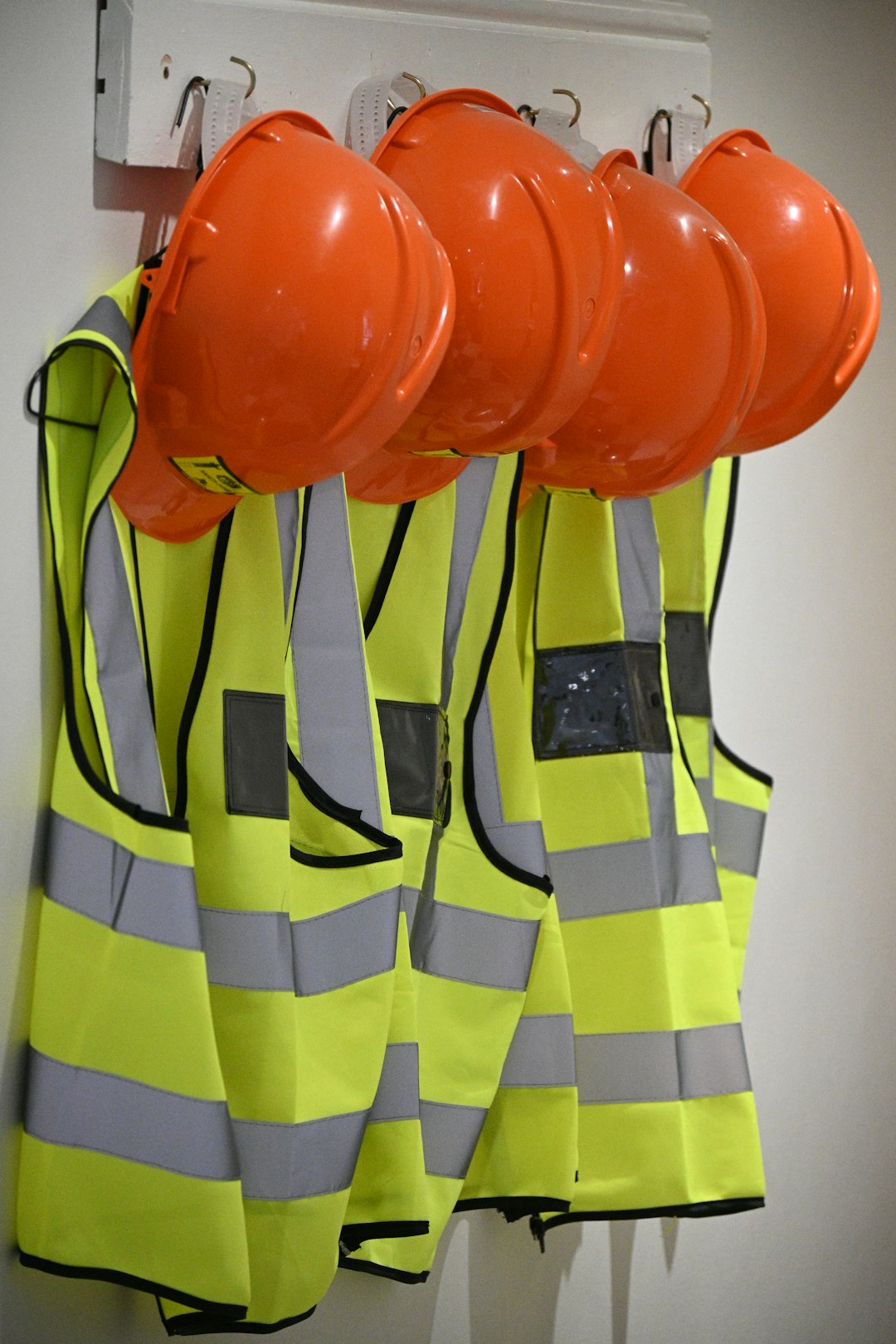
Personal protective equipment
Selected according to the test: gloves suited to the work, masks, helmet, safety boots and protective goggles.
Operating the equipment
Only trained and authorised staff operate a machine, and both the machine and the work area are checked before it is started. Cleaning or maintenance while running is forbidden.
Heat and hot surfaces
Heat-resistant gloves and tools for ovens and hot vessels; hot samples are never handled directly. They cool in a designated place, away from anything flammable.
Chemicals
Kept in proper, clearly identified containers; no unknown substance is used. Spills are handled according to that substance's own safety instructions.
Lifting, moving and electrical safety
Proper means of transport for samples and heavy loads, to avoid injury. No equipment with damaged cords or plugs, and power is disconnected before maintenance.
Accidents and emergencies
On any injury, spill or fire: work stops and people are moved away from the hazard, the supervisor is told immediately, first aid is given — then the incident is documented and acted on so it does not recur.
The above is taken from procedure QP-03 of the quality manual submitted with our accreditation file. The laboratory does not yet hold a safety management system certificate such as ISO 45001 — this is a practised commitment, not a claim of accreditation.
Ready to receive your samples
Reach out to request a quote or to schedule a field sampling appointment.
Start your project on a trusted foundation
Send us your project details and we will come back with a quote and a testing schedule.
Download company profile (PDF)